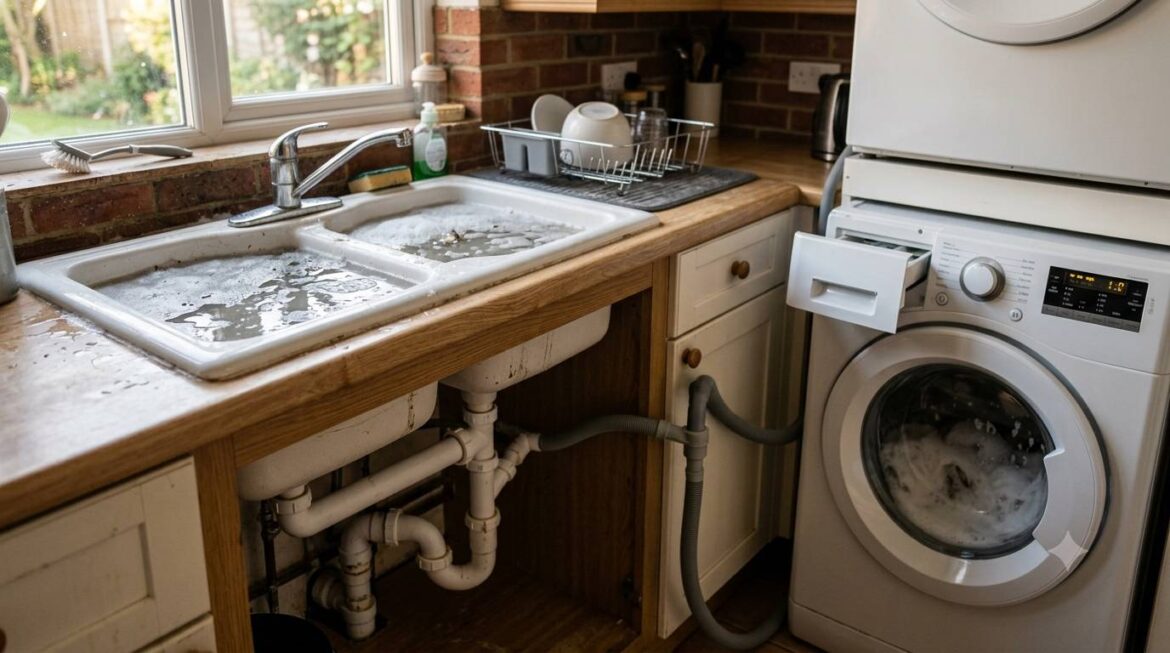

You start the washing machine and go about your usual routine, only to notice dirty water collecting in the kitchen sink. It may seem strange that running a load of laundry could affect a completely different fixture, but the two can be connected through the home’s drainage system. When water from the washing machine cannot move through the drain properly, it may find another place to back up.
A kitchen sink that backs up whenever the washing machine drains can point to a blockage or drainage problem that needs attention. Understanding common kitchen sink repair problems can help you recognize what may be happening and decide what to check first. The important clue is the timing. If the sink drains normally during regular use but backs up when the washer releases a large amount of water, the issue may be somewhere in the shared drainage line.
The Washing Machine May Be Revealing a Drainage Problem
A washing machine can send a substantial amount of water into the home’s drainage system during its drain cycle. Under normal conditions, the pipes should carry that water away without affecting other fixtures. If part of the drain line is restricted, however, the sudden flow can expose the problem.
The sink may then become the easiest place for wastewater to rise because it is connected to the same drainage network. This doesn’t necessarily mean the kitchen sink itself is the source of the problem. The blockage could be farther along the line, where the sink and washing machine drainage paths meet.
A Partial Clog Could Be Restricting the Drain
One common reason for this type of backup is a partial blockage. Unlike a completely blocked drain, a partial clog may still allow water to drain during normal sink use. The problem becomes more obvious when a large volume of water enters the system at once.
Kitchen drains can collect grease, food particles, soap residue, and other debris over time. Some of this material can stick to the inside of the pipe and gradually narrow the passage. When the washing machine pumps out water quickly, the restricted pipe may not be able to handle the flow.
The Problem May Be Further Down the Drain Line
It’s easy to assume that a backup in the sink must be caused by something directly underneath the sink. That’s not always the case. If the sink drains reasonably well until the washing machine runs, the restriction could be farther down the shared drain line.
This is especially worth considering when other fixtures show similar symptoms. For example, if another sink, tub, or floor drain begins draining slowly at around the same time, it may indicate that the problem affects a larger section of the plumbing system rather than one kitchen fixture.
Watch for These Warning Signs
The timing of the backup is useful, but other symptoms can provide additional clues about what is happening inside the drainage system.
- Slow kitchen sink drainage: If the sink has gradually become slower even when the washing machine isn’t running, there may already be a developing blockage.
- Gurgling sounds: Bubbling or gurgling from the sink when the washer drains can indicate that water and air are having difficulty moving through the pipe.
- Water rising in the sink: Dirty or cloudy water appearing during the washing machine’s drain cycle is a stronger sign that wastewater is being pushed back toward the sink.
- Multiple slow fixtures: If several drains in the home are affected, the restriction may be located farther along the main drainage path.
Not every symptom will appear at the same time. Paying attention to when the problem happens and which fixtures are affected can make it easier to understand the situation.
Grease and Food Waste Can Contribute
The kitchen sink handles plenty of material that can eventually build up inside a drain. Grease and cooking oils are particularly troublesome because they can stick to pipe walls rather than simply washing away. Food particles can also collect around existing buildup and gradually reduce the available space inside the pipe.
Using a sink strainer can help keep larger food particles out of the drain. Grease and cooking oil should also be disposed of properly rather than poured down the sink. These habits won’t fix an existing blockage, but they can help reduce unnecessary buildup over time.
Check the Sink’s P-Trap, But Don’t Stop There
The P-trap is the curved section of pipe underneath the kitchen sink. It holds a small amount of water and helps prevent sewer gases from entering the home. It can also collect debris, which may contribute to drainage problems.
If the sink is slow all the time, the P-trap may be worth considering as one possible source. However, when the sink only backs up during the washing machine’s drain cycle, the problem may be located beyond the trap. Focusing only on the pipe directly under the sink could therefore miss the actual restriction.
Be Careful With Chemical Drain Cleaners
When a sink backs up, reaching for a chemical drain cleaner can seem like an easy solution. These products may not address the actual cause, particularly when the blockage is deeper in a shared drain line.
They can also create problems if the clog remains and someone later needs to work on the plumbing. If you’ve already tried basic measures and the backup continues, it’s better to determine where the restriction is rather than repeatedly adding chemicals to the drain.
When the Backup Keeps Happening
A one-time slow drain may have a simple explanation, but a sink that repeatedly backs up whenever the washing machine runs deserves more attention. Repeated backups suggest that the drainage system is struggling to handle the amount of water being discharged.
Instead of continuing to run the washer and waiting for the sink to overflow, pay attention to the pattern. Note whether the backup happens during every wash cycle, whether the sink is slow at other times, and whether other fixtures are affected. This information can help identify the nature and location of the problem.
Professional Inspection May Be Necessary
If the blockage is deeper inside the drainage system, determining its exact location may require more than checking the visible plumbing. A professional can assess the drainage layout and look for restrictions that aren’t accessible from the sink opening.
This is particularly useful when the problem keeps returning after basic cleaning or when several fixtures are involved. Finding the underlying restriction can help address the actual cause instead of repeatedly treating the symptoms.
How to Reduce the Chance of Future Backups
Good kitchen habits can help reduce the amount of debris entering the drainage system. Use a strainer to catch food scraps, avoid pouring grease into the sink, and don’t treat the drain like a disposal system for materials that shouldn’t go down it.
It’s also useful to pay attention to gradual changes. A sink that drains a little slower each month may be showing an early warning sign. Dealing with reduced drainage before a major backup occurs can make the problem easier to manage.
Final Thoughts
A kitchen sink that backs up when the washing machine runs is usually a sign that something is affecting the drainage system. The cause may be a partial clog near the kitchen drain, a restriction farther along a shared line, or buildup that has gradually reduced the space available for wastewater to pass.
Pay attention to the timing of the backup, changes in drainage speed, unusual sounds, and whether other fixtures are affected. Avoid relying on repeated quick fixes when the problem keeps returning. Understanding where the restriction may be located can help you take the right next step and keep a drainage issue from becoming a more disruptive plumbing problem.