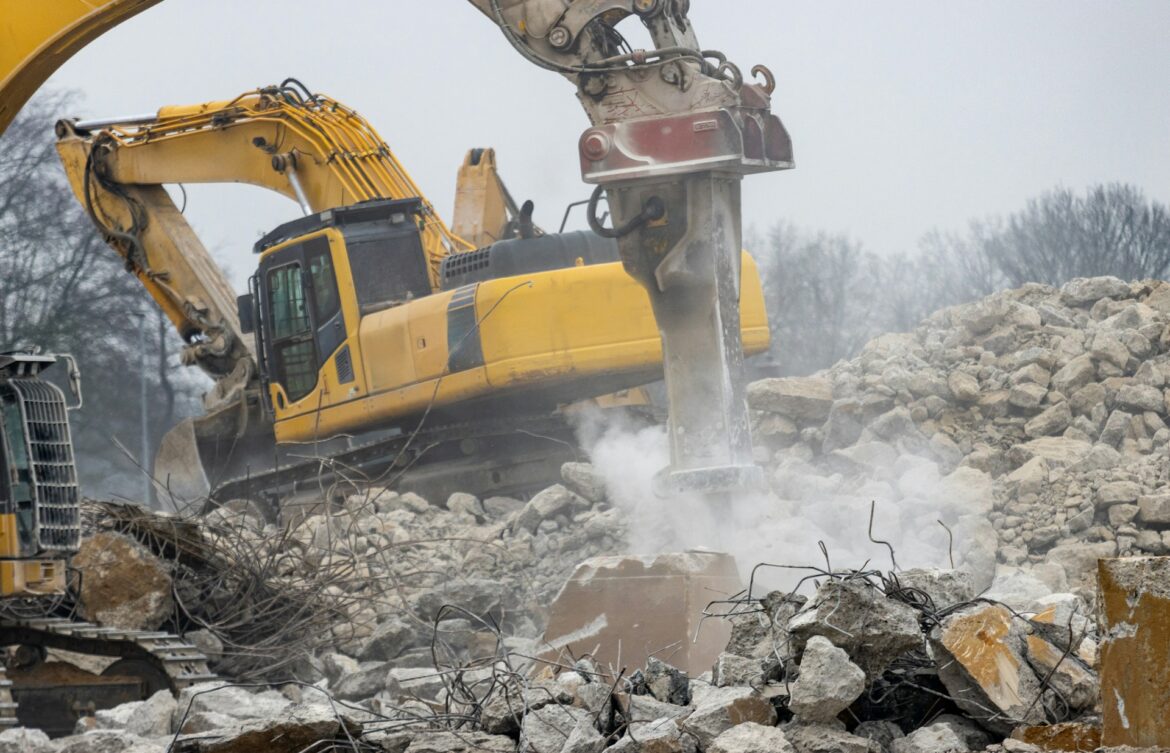

Breaking hard rock and reinforced concrete efficiently requires equipment built for demanding conditions. Understanding how hydraulic breakers operate, where they perform best, and how they improve productivity helps operators and project managers choose solutions that deliver reliable performance across mining, quarrying, construction, and demolition applications.
Introduction
Breaking hard materials safely and efficiently is one of the biggest challenges across mining, quarrying, construction, and demolition projects. Modern rock breakers provide a controlled and productive solution by delivering repeated hydraulic impact to fracture rock, concrete, and other tough materials. Unlike methods that rely on uncontrolled force, hydraulic breakers offer greater precision while helping operators maintain a steady workflow. Available in a wide range of sizes and configurations, they can be matched to different carrier machines and working conditions. When combined with breaker booms and suitable demolition tools, they form an effective system that supports safer operations, reduces downtime, and improves material handling across demanding environments.
What Are Hydraulic Rock Breakers?
Hydraulic rock breakers are heavy-duty attachments designed to convert hydraulic power from a carrier machine into repeated impact energy. Mounted on compatible excavators or installed as part of a breaker boom system, they are used to break oversized rocks, reinforced concrete, asphalt, and other hard materials into smaller, manageable pieces.
Rather than crushing material continuously, the breaker uses rapid piston strikes to create fractures within the surface. Each impact weakens the material until it separates, allowing operators to remove or process it more efficiently. Manufacturers offer small, medium, large, heavy-duty, scaler, and side-mounted breaker models so equipment can be matched to specific applications and working conditions.
How Hydraulic Breakers Work
The operating principle is simple but highly effective. Hydraulic oil supplied by the carrier powers an internal piston that repeatedly strikes the working tool. Every impact transfers concentrated energy directly into the material, gradually creating cracks until the rock or concrete breaks apart.
The effectiveness of this process depends on several factors, including hydraulic flow, operating pressure, breaker size, and correct tool selection. Matching these elements correctly helps achieve consistent breaking performance while reducing unnecessary wear on both the attachment and the carrier machine.
Unlike continuous cutting equipment, hydraulic breakers focus energy precisely where it is needed. This controlled impact allows operators to work accurately, particularly in environments where surrounding structures or equipment must be protected.
Where Hydraulic Rock Breakers Perform Best
Hydraulic breakers are designed for a wide range of demanding industries where hard materials must be broken safely and efficiently.
They are particularly well suited for:
- Mining operations for secondary rock breaking and clearing crusher blockages.
- Quarrying to reduce oversized boulders before crushing.
- Construction projects involving excavation, foundations, and hard ground.
- Demolition work requires controlled removal of concrete structures.
- Recycling applications where concrete must be broken into manageable sections.
Their versatility makes them valuable wherever controlled impact delivers better productivity than alternative breaking methods.
Why Breaker Booms Improve Productivity
In many crushing operations, hydraulic breakers are installed on dedicated breaker boom systems positioned above crushers or material handling points. These systems allow operators to reach oversized rocks quickly without exposing personnel to unnecessary hazards.
A properly designed breaker boom system helps maintain continuous production by reducing interruptions caused by blockages. Depending on operational requirements, breaker booms are available in multiple sizes with different reach capabilities, allowing them to serve compact installations as well as large mining and quarrying facilities. Complete systems may include the breaker, boom, power pack, and electrification package for an integrated solution.
Choosing the Right Equipment
Selecting the correct rock breakers for a project involves more than choosing the largest available model. The equipment should match both the carrier machine and the material being processed.
Important factors include:
- Carrier machine size and hydraulic capacity.
- Material hardness and thickness.
- Working environment.
- Required reach and accessibility.
- Expected production levels.
- Frequency of operation.
Correct equipment selection improves productivity while helping reduce maintenance costs and unnecessary component wear over the long term.
Best Practices for Efficient Operation
Operator technique has a direct impact on performance and equipment life. Even the most advanced hydraulic breaker performs best when used according to recommended operating practices.
Maintaining steady contact with the material, positioning the tool correctly, and avoiding unnecessary idle striking all contribute to better productivity. Applying excessive force does not always improve breaking performance. Instead, allowing the hydraulic system to deliver consistent impact energy often produces faster and cleaner results.
Regular inspection during operation also helps identify worn tools or hydraulic issues before they develop into larger maintenance concerns.
Maintenance Supports Long-Term Performance
Routine maintenance plays a vital role in keeping hydraulic breakers operating efficiently. Because these attachments work in harsh environments, regular inspections help prevent unexpected downtime and maintain reliable performance.
Key maintenance tasks include checking hydraulic connections, inspecting the working tool for wear, ensuring correct lubrication, monitoring seals, and replacing worn components before they affect productivity. Following scheduled service intervals also helps extend equipment life while maintaining consistent breaking efficiency.
Well-maintained equipment not only reduces repair costs but also contributes to safer operation by ensuring components continue performing as intended under demanding working conditions.
Expert Tips for Maximising Results
Achieving the best performance depends on combining the right equipment with good operating practices rather than relying solely on higher impact force.
Experienced operators generally focus on selecting equipment suited to the application, maintaining proper hydraulic settings, performing regular inspections, and following recommended maintenance schedules. Using compatible breaker booms and demolition tools where appropriate can further improve productivity by creating a complete material-breaking solution tailored to the task.
Investing time in equipment selection and maintenance often delivers greater long-term efficiency than simply increasing machine size or operating speed.
Conclusion
Modern rock breakers have become an essential part of efficient mining, quarrying, construction, and demolition operations. Their ability to convert hydraulic power into controlled impact energy allows operators to break difficult materials safely while maintaining productivity and reducing unnecessary downtime. When paired with suitable breaker booms and matched correctly to the carrier machine, they provide reliable performance across a wide range of demanding applications. Equally important are proper equipment selection, correct operating techniques, and regular maintenance, all of which contribute to longer service life and lower operating costs. By understanding how hydraulic breakers work and where they are best suited, businesses can make informed decisions that improve efficiency, support safer working environments, and achieve consistent results. Choosing the right rock breakers for the job ensures every project benefits from dependable, high-performance material breaking.