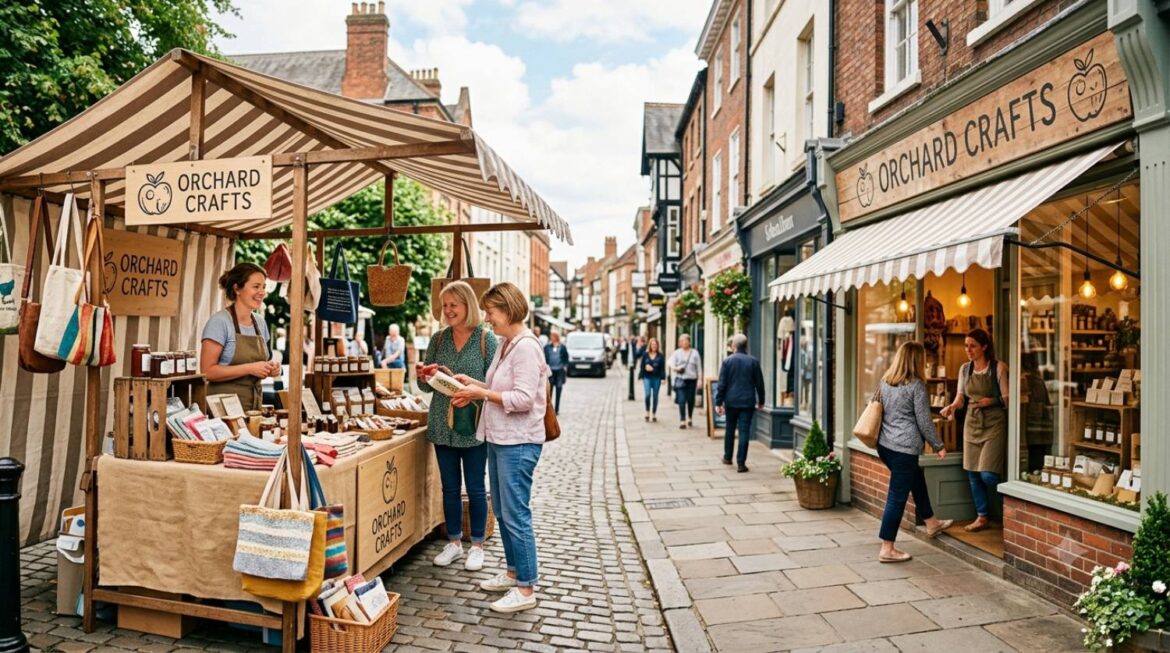

Moving from a market stall towards a high-street presence does not require an expensive rebrand. Small retailers can become recognisable through consistent colours, clear messaging and practical packaging. By spending carefully and repeating a few distinctive elements, an independent business can appear established while protecting cash flow and preparing for sustainable growth.
A strong brand isn’t about having a large marketing budget. Customers remember businesses that look clear and consistent, from weekend stalls to permanent shops. Simple elements like colours, signage, displays and printed carrier bags can build recognition. By focusing on a clear identity, using reusable design elements and tracking what customers respond to, independent retailers can create a professional image without overspending.
A strong brand starts with knowing the customer, product and desired impression. Choose two or three colours, one clear logo and no more than two typefaces, then use them consistently across labels, social media, displays and communications. Consistency is more important than complexity.
Make the Market Stall Memorable
A market stall is often the first physical expression of a small retail brand. It should look organised, approachable and easy to understand from a distance.
Improve the Customer’s View
Display the business name clearly and keep the strongest products at eye level. Prices should be visible so customers can browse without feeling pressured.
Focus spending on practical items that can be reused:
- A durable branded sign
- Coordinated table coverings
- Clear product labels
- Portable display stands
- Consistent staff clothing or aprons
Avoid filling every available space. A cleaner arrangement helps products stand out and makes the stall appear more professional.
Turn Every Sale Into Brand Visibility
Packaging continues promoting the business after the customer leaves, carrying the brand through a market, shopping area or public transport journey. Selecting packaging that fits the product is important, with bags chosen according to product size, weight and likely customer use; flat-handle and twisted-handle paper bags may suit everyday purchases, while cotton, canvas or jute options can support longer reuse. Well-designed printed carrier bags should display the logo clearly without overcrowding the surface, with a business name, distinctive colour and short web or social address often being enough. Businesses should request samples before ordering and check material strength, handle comfort and print quality. An expert tip is to calculate the total cost per bag, including artwork, printing, delivery and storage, as a lower unit price may not represent better value if the minimum order creates more stock than the business can use.
Create Consistency Across Every Channel
Customers should receive the same visual message whether they visit a stall, browse online or enter a future shop. This means repeating the same core elements wherever possible, including identical colours, logo proportions and wording, so that product photography, social media graphics, receipts and packaging all feel like they belong to one unified business. To keep design costs under control, it is also helpful to use templates and create reusable layouts for things like announcements, price cards, care instructions and thank-you messages instead of designing each item from scratch.
Prepare for a High-Street Move
A permanent shop introduces rent, utilities, insurance, fittings and staffing costs. Branding decisions must therefore remain practical.
Scale What Already Works
Review which products sell consistently, which displays attract attention and which messages customers remember. Carry successful elements into the shop instead of replacing the identity simply because the location has changed.
Before committing money:
- Set separate budgets for essential fittings and decoration.
- Design signs that remain readable from the street.
- Use flexible displays that can accommodate changing stock.
- Keep packaging sizes limited to reliable sellers.
- Reserve funds for operating costs after opening.
A high-street location should strengthen an established brand rather than disguise an unclear one.
FAQs
Does a small business need professional branding immediately?
Not necessarily. It needs a clear, consistent identity. Professional support can be added when the budget and growth plans justify it.
Which branding element should come first?
Begin with a readable logo, limited colour palette and clear description of what the business sells.
Is custom packaging worth the cost?
It can be when it protects products, improves presentation and increases visibility. Calculate the complete cost before ordering.
How can a retailer avoid wasting packaging?
Choose versatile sizes, use evergreen designs and order quantities based on realistic sales forecasts.
Should branding change when moving into a shop?
Only where necessary. Retain familiar elements so existing customers can recognise the business.
Conclusion
Building a recognisable retail brand on a tiny budget requires discipline rather than constant spending. Begin with a simple identity and repeat it across signage, displays, labels, social media and customer communication. Invest first in items that improve clarity, product protection or continued visibility.
Use the market-stall stage to test colours, messages, packaging and display arrangements before committing to permanent shop fittings. Request samples, approve artwork carefully and calculate complete costs rather than comparing headline prices alone. Keep designs flexible enough to survive seasonal campaigns and business growth. When the move to a high-street location becomes possible, carry forward the elements customers already recognise instead of starting again. A clear logo, consistent colours and appropriately sized printed carrier bags can help an independent retailer look professional, remain memorable and build a coherent identity without placing unnecessary pressure on a limited budget.